|
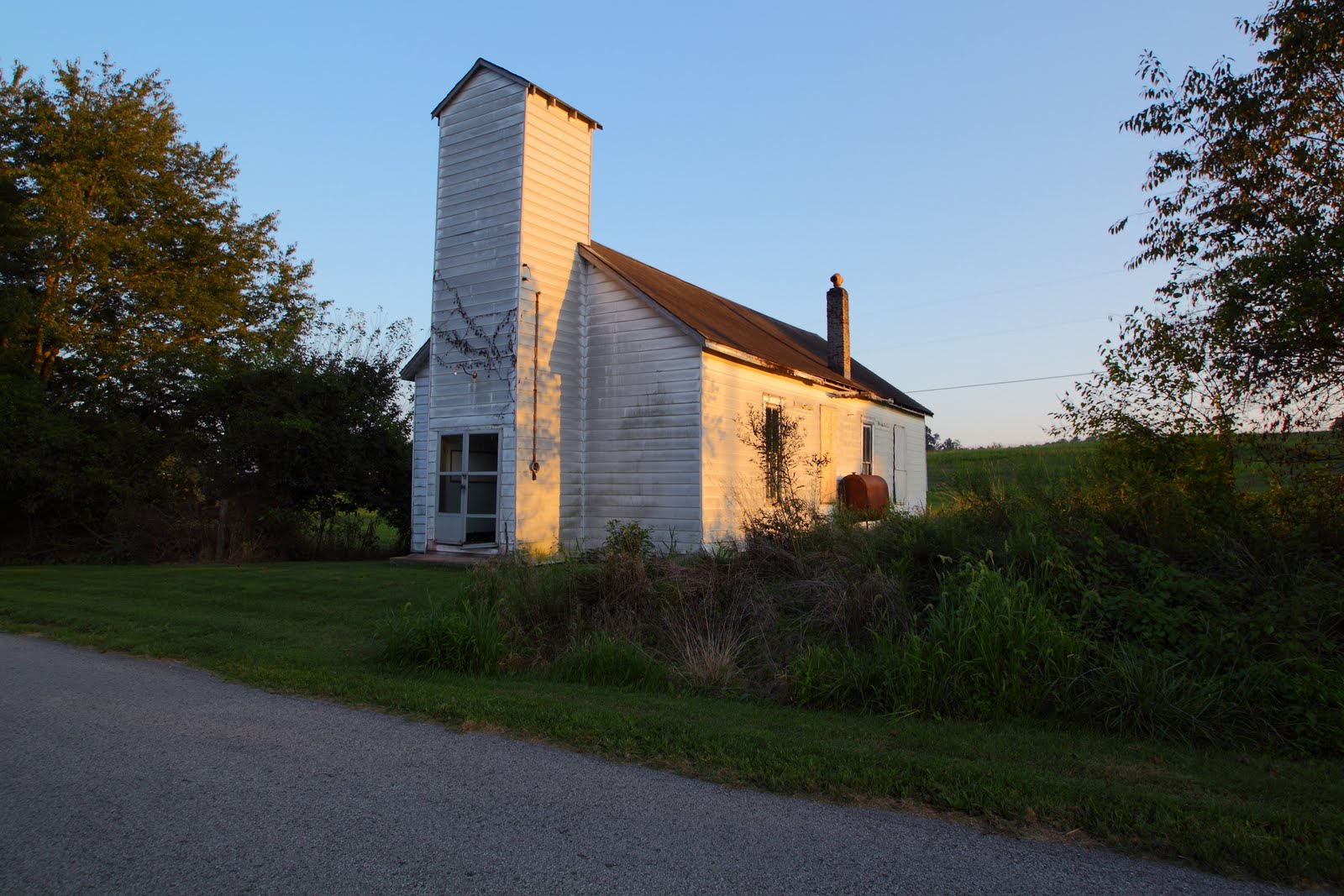
| Plant life has taken over the schoolhouse |
Near my home in Orville, KY, stands (somewhat) this abandoned, one-room schoolhouse. The schoolhouse has long since been vacated, and the exposure to the elements has proven to be too much for this old structure to handle. Many of the older population in the area remember attending school here, and especially Ms. Lila (Delilah Douthitt). Ms. Lila is reported to be the youngest teacher ever in the public school system in the commonwealth of Kentucky at the age of 17 years. She is now 85, and a wonderful woman to have a conversation with.

The schoolhouse now rests as the plant life slowly reclaims the structure. In this small field, a nearby cattle farmer stores hay rolls around the schoolhouse. In order to get to the interior of the schoolhouse, I had to climb and walk over the hay rolls, then climb down into the front entrance.

Before the county school system centralized the education countywide, the one-room schoolhouse was the most effective and efficient way of educating the children in the area. Nowadays each household owns at least one automobile, and bus fleets have become an expectation for school districts across the nation. However, not long ago, children walked to the nearest one-room schoolhouse to learn
the three R's.

This structure now suffers from decades of neglect. The wood is rotten, including the hardwood floors. The support beams have given way, and it is simply a matter of time before the entire structure collapses.

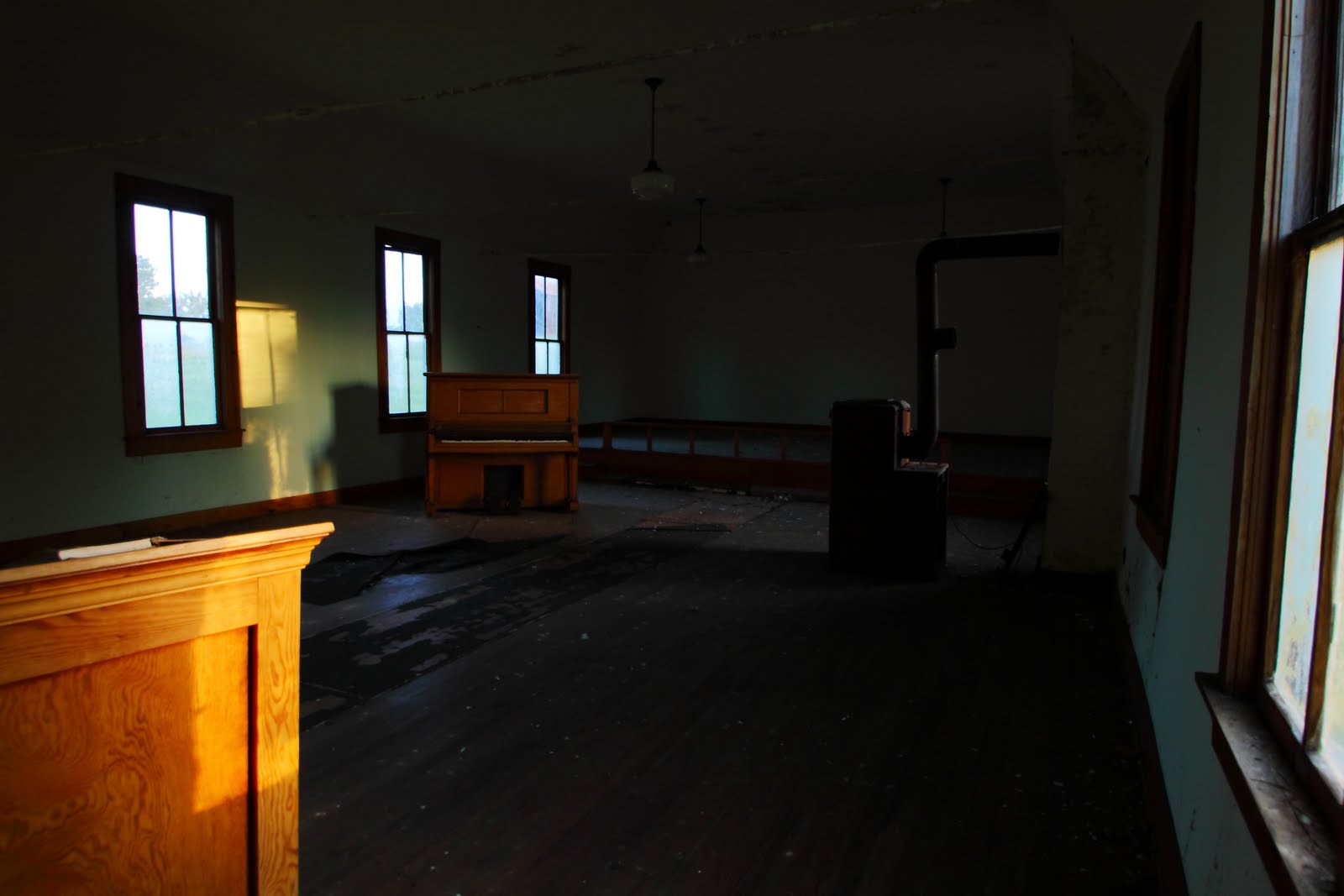
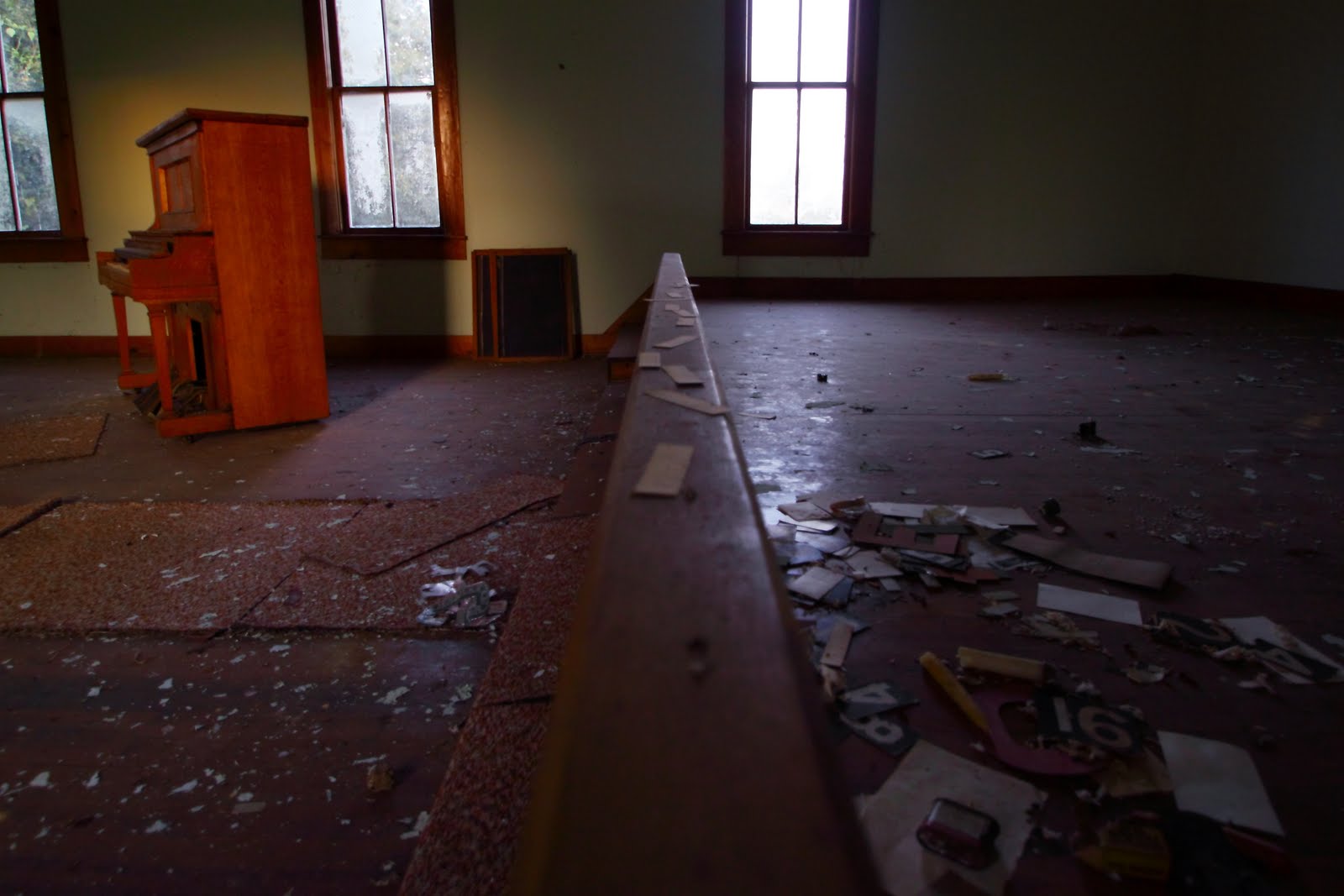
The roof is only partially collapses in the main room of the schoolhouse. This once "one-room" schoolhouse looks to have had walls placed in after original construction to have a small entrance room followed by a large front room and a small room in the rear of the building. Broken glass, splintered wood, and parts to the roof line the rotting hardwood floors. It is unclear what this small room was used for.

The rear door has an appearance to experience, which I think is best conveyed in black and white. It tells a story of what went on in this building, the people that learned to read here, the passed era which seems to have been forgotten in my generation. A time when communities were closer, work was harder, and families honored God's divine providence. This door opens to the rear of the structure.

In the rear of the building, I see clearly how far the structure is leaning and near total collapse. Trees that have grown larger since the schoolhouse's abandonment act as support beams for the walls, temporarily delaying the inevitable. Although the distortion from the ultra-wide angle lens adds a bit of extreme appearance of leaning, I assure you that this building is about to be captured by God's living nature.

The photo on the right is of the interior door just passed the small foyer on the front of the structure. You cannot walk through this door any longer. The roof has crashed through the glass of the door, and the collapse of the eastern wall has dragged the door back toward the rear.

The photo to the left is of the large, front room where school was likely held. This is the largest room in the structure by far, and even had a brick chimney, which if you look on the far wall in the center of the photo you may see the remnant of that chimney. The brick has since collapsed and has fallen through the rotten hardwood floors. On the right of the photograph, you can see an electric plug. There is evidence of electric light on the collapsed ceiling as well.

Vines and trees claim the exterior, southern wall. Some glass remains on this window. This wall has a deceiving appearance, but the rear and front of this wall is supported by trees. Without the trees, this wall would collapse.

The debris and soil build-up on some areas of the floor tells a story of a losing battle from a fierce war between human structure and nature. Buildings constructed by human hands has a beginning, and without constant maintenance, has an end. What is maintenance but the battle raging on? What is neglect but God's living nature winning the battle? People and the work of their hands come and go, but God is eternal.


 The schoolhouse now rests as the plant life slowly reclaims the structure. In this small field, a nearby cattle farmer stores hay rolls around the schoolhouse. In order to get to the interior of the schoolhouse, I had to climb and walk over the hay rolls, then climb down into the front entrance.
 Before the county school system centralized the education countywide, the one-room schoolhouse was the most effective and efficient way of educating the children in the area. Nowadays each household owns at least one automobile, and bus fleets have become an expectation for school districts across the nation. However, not long ago, children walked to the nearest one-room schoolhouse to learn the three R's.
  This structure now suffers from decades of neglect. The wood is rotten, including the hardwood floors. The support beams have given way, and it is simply a matter of time before the entire structure collapses.
  The roof is only partially collapses in the main room of the schoolhouse. This once "one-room" schoolhouse looks to have had walls placed in after original construction to have a small entrance room followed by a large front room and a small room in the rear of the building. Broken glass, splintered wood, and parts to the roof line the rotting hardwood floors. It is unclear what this small room was used for.
 The rear door has an appearance to experience, which I think is best conveyed in black and white. It tells a story of what went on in this building, the people that learned to read here, the passed era which seems to have been forgotten in my generation. A time when communities were closer, work was harder, and families honored God's divine providence. This door opens to the rear of the structure.
 In the rear of the building, I see clearly how far the structure is leaning and near total collapse. Trees that have grown larger since the schoolhouse's abandonment act as support beams for the walls, temporarily delaying the inevitable. Although the distortion from the ultra-wide angle lens adds a bit of extreme appearance of leaning, I assure you that this building is about to be captured by God's living nature.
 The photo on the right is of the interior door just passed the small foyer on the front of the structure. You cannot walk through this door any longer. The roof has crashed through the glass of the door, and the collapse of the eastern wall has dragged the door back toward the rear.
 The photo to the left is of the large, front room where school was likely held. This is the largest room in the structure by far, and even had a brick chimney, which if you look on the far wall in the center of the photo you may see the remnant of that chimney. The brick has since collapsed and has fallen through the rotten hardwood floors. On the right of the photograph, you can see an electric plug. There is evidence of electric light on the collapsed ceiling as well.
 Vines and trees claim the exterior, southern wall. Some glass remains on this window. This wall has a deceiving appearance, but the rear and front of this wall is supported by trees. Without the trees, this wall would collapse.
 The debris and soil build-up on some areas of the floor tells a story of a losing battle from a fierce war between human structure and nature. Buildings constructed by human hands has a beginning, and without constant maintenance, has an end. What is maintenance but the battle raging on? What is neglect but God's living nature winning the battle? People and the work of their hands come and go, but God is eternal.


 As many of you guys know, I am not a big fan of PhotoShop. However, I had some fun with one of my photographs making it appear old and worn.